← All alternatives

ActiveCampaign alternatives for marketing email

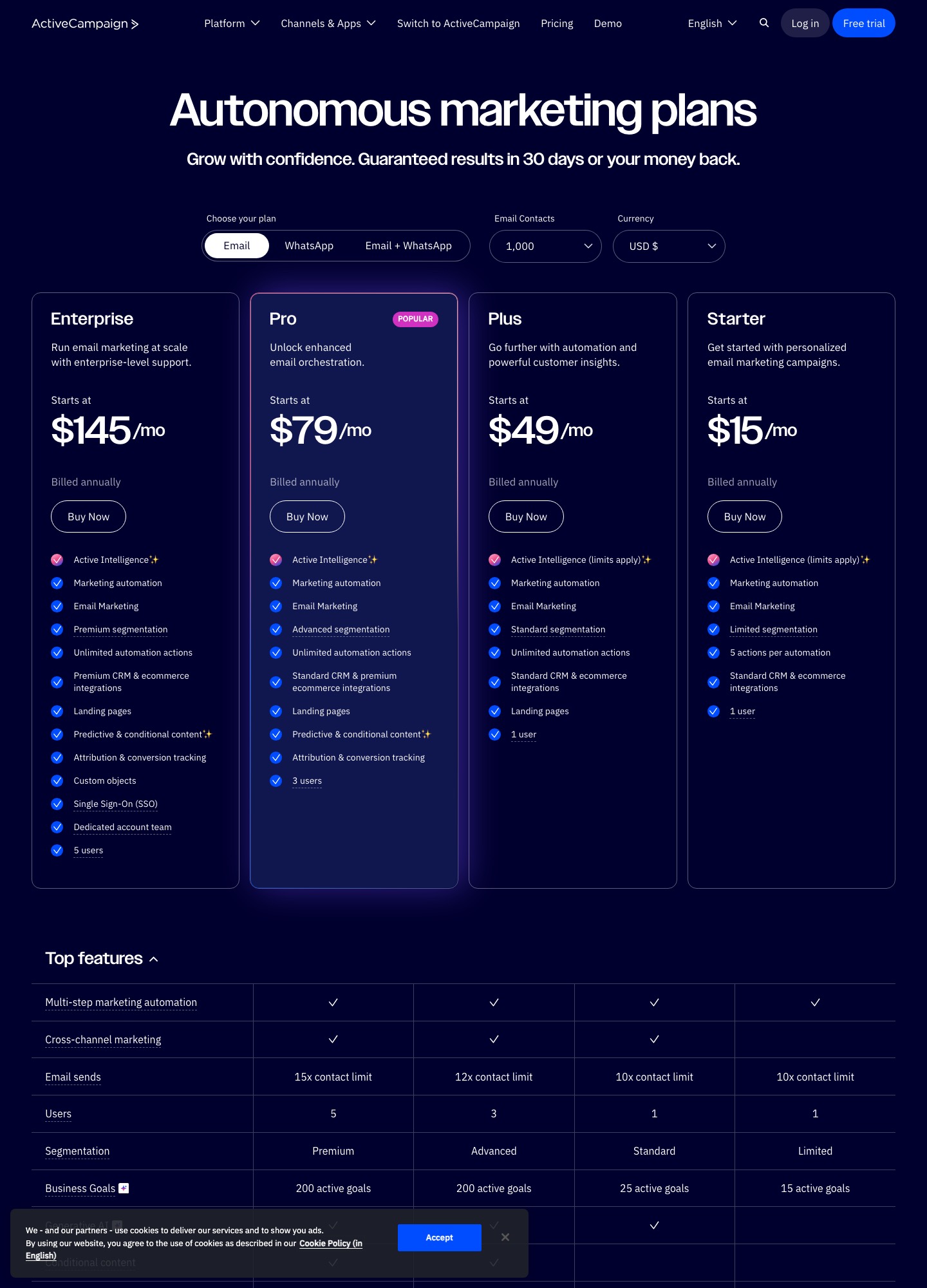
The right replacement depends on what ActiveCampaign currently owns: newsletters, product events, commerce data, transactional delivery, or the CRM handoff. This guide treats those as different migration problems.

First decisionShortlist by operating modelEvidence to collect
Is the primary job publishing, lifecycle automation, commerce, CRM, or API delivery?Newsletter: Kit/beehiiv · SaaS lifecycle: Loops/Userlist/Customer.io · Commerce: Klaviyo/Drip/Omnisend · Infrastructure: SendGrid/MailgunConsent fields, event names, profile volume, sends, integrations, conversion definitions, and owners.

15 serious ActiveCampaign alternatives

These options are intentionally not ranked by brand size. They solve different jobs. Pricing changes frequently and often depends on contacts, sends, events, channels, or paid modules, so use the linked vendor site as the current source and treat the migration pilot below as the decision evidence.

PlatformBest forDo not switch until you test
SequenzySaaS teams that need product, subscription, and lifecycle context in one focused email workflowRebuild one activation or billing-aware journey with a defined event, an explicit conversion, a suppression rule, and a clean exit.
MailerLitesmall teams that want newsletters, forms, and straightforward automations in one workspaceRebuild one welcome flow with a source field, a consent change, a suppression, and a conversion event.
Brevoteams balancing campaign email with transactional delivery, SMS, or WhatsAppSend a marketing broadcast and a password-reset-style transactional message to the same test profile.
Kitcreators and small publishers whose primary asset is an owned audience and recurring publicationPublish one issue, tag subscribers from two acquisition sources, and run a short recommendation or onboarding sequence.
Customer.ioproduct-led teams with a reliable event stream and engineers who want precise behavioral orchestrationReplay a week of sanitized events for one workspace.
HubSpotorganizations that want marketing activity, CRM ownership, and sales context in one operating systemChoose one lead-nurture workflow with a sales handoff.
Klaviyocommerce teams whose email decisions depend on catalog, order, and customer-value dataRecreate one abandoned-cart or post-purchase flow using a small product catalog.
Loopsmodern SaaS teams that want focused lifecycle email without inheriting a large marketing suiteInstrument three product events and build an onboarding sequence with an activation exit rule.
UserlistSaaS companies that want product-qualified segmentation and customer education without a heavyweight CRMDefine account, user, and plan states for one onboarding path.
Dripdirect-to-consumer brands that need customer behavior, revenue, and automation in the same conversationRun a product-interest to purchase flow on a test store.
Omnisendecommerce teams comparing email, SMS, and automated merchandising journeysBuild a browse/cart recovery test with separate email and SMS consent states.
SendGridteams separating high-volume transactional delivery from marketing campaign productionSend a transactional event and a small marketing segment through separate sender identities.
Mailgundeveloper-led organizations that need programmable email infrastructure and clear delivery eventsUse a staging domain to exercise accepted, deferred, bounced, complained, and unsubscribed states.
Campaign Monitorbrand and editorial teams prioritizing polished broadcasts, templates, and client-friendly reviewRecreate one branded campaign and a simple post-signup journey.
beehiivnewsletter businesses that care about publishing cadence, referrals, and audience growth loopsRun one issue from acquisition through referral attribution and unsubscribe.

Sequenzy: best ActiveCampaign alternative for SaaS teams that need product, subscription, and lifecycle context in one focused email workflow

Sequenzy is a strong first alternative when the reason for leaving a general-purpose platform is better alignment with activation, billing, onboarding, and retention decisions. Its fit should be judged against the team’s real product events and account states, not a generic feature checklist. If that is the reason for switching, compare the platform against the current workflow at the level of records and decisions: what identifies a person or account, which event starts a message, who can stop it, and where a marketer or engineer can inspect the result. Read the official Sequenzy product information and its current pricing page; these are the sources to recheck before publishing a plan or feature claim.

The trade-off is scope: a focused SaaS lifecycle tool is not automatically the right home for a retail catalog, a publication business, or a high-volume infrastructure workload. Confirm integrations, event coverage, consent controls, reporting, and current plan limits before moving a complete program. A lower headline price is not automatically a lower operating cost if the team must rebuild consent logic, purchase data, templates, webhooks, dashboards, or approval controls. Model the next 12 months using the vendor’s billing unit—active contacts, sends, events, channels, seats, or paid modules—and record overages, annual-vs-monthly terms, onboarding, and implementation time separately.

Decision areaWhat this option may improveRisk to own
Workflow fitSaaS teams that need product, subscription, and lifecycle context in one focused email workflowThe trade-off is scope: a focused SaaS lifecycle tool is not automatically the right home for a retail catalog, a publication business, or a high-volume infrastructure workload. Confirm integrations, event coverage, consent controls, reporting, and current plan limits before moving a complete program.
Migration proofOne representative journey can be rebuilt and inspected before cutover.Do not infer full parity from an editor demo or a successful single send.
PricingModel the actual active profiles, sends, events, channels, or paid seats.Plan names and included limits can change; verify directly with Sequenzy.

Bounded pilot

Rebuild one activation or billing-aware journey with a defined event, an explicit conversion, a suppression rule, and a clean exit. Compare audience membership, timing, delivery feedback, and reporting against the current workflow. The pass condition is not “the email sent.” It is that identity, consent, triggering, stopping, delivery feedback, and reporting all agree for the same test record.

Pros: SaaS teams that need product, subscription, and lifecycle context in one focused email workflow; the pilot can prove fit against a real workflow before cutover. Cons: The trade-off is scope: a focused SaaS lifecycle tool is not automatically the right home for a retail catalog, a publication business, or a high-volume infrastructure workload. Confirm integrations, event coverage, consent controls, reporting, and current plan limits before moving a complete program. Do not describe a lower price, better deliverability, or feature parity unless the linked vendor evidence and your test cohort support it.

MailerLite: best ActiveCampaign alternative for small teams that want newsletters, forms, and straightforward automations in one workspace

Its appeal is the short path from landing page to broadcast: a lean team can own the form, segment, email, and basic automation without adopting a full CRM. If that is the reason for switching, compare the platform against the current workflow at the level of records and decisions: what identifies a person or account, which event starts a message, who can stop it, and where a marketer or engineer can inspect the result. Read the official MailerLite product information and its current pricing page; these are the sources to recheck before publishing a plan or feature claim.

The trade-off is depth. Complex event schemas, revenue attribution, and large-account permissions may need another system around it. A lower headline price is not automatically a lower operating cost if the team must rebuild consent logic, purchase data, templates, webhooks, dashboards, or approval controls. Model the next 12 months using the vendor’s billing unit—active contacts, sends, events, channels, seats, or paid modules—and record overages, annual-vs-monthly terms, onboarding, and implementation time separately.

Decision areaWhat this option may improveRisk to own
Workflow fitsmall teams that want newsletters, forms, and straightforward automations in one workspaceThe trade-off is depth. Complex event schemas, revenue attribution, and large-account permissions may need another system around it.
Migration proofOne representative journey can be rebuilt and inspected before cutover.Do not infer full parity from an editor demo or a successful single send.
PricingModel the actual active profiles, sends, events, channels, or paid seats.Plan names and included limits can change; verify directly with MailerLite.

Bounded pilot

Rebuild one welcome flow with a source field, a consent change, a suppression, and a conversion event. Check that each state is visible in reporting. The pass condition is not “the email sent.” It is that identity, consent, triggering, stopping, delivery feedback, and reporting all agree for the same test record.

Pros: Small teams that want newsletters, forms, and straightforward automations in one workspace; the pilot can prove fit against a real workflow before cutover. Cons: The trade-off is depth. Complex event schemas, revenue attribution, and large-account permissions may need another system around it. Do not describe a lower price, better deliverability, or feature parity unless the linked vendor evidence and your test cohort support it.

Brevo: best ActiveCampaign alternative for teams balancing campaign email with transactional delivery, SMS, or WhatsApp

Brevo is interesting when marketing and operational messages share a commercial owner but should remain separate streams. Its broader channel mix can reduce the number of vendors in a small stack. If that is the reason for switching, compare the platform against the current workflow at the level of records and decisions: what identifies a person or account, which event starts a message, who can stop it, and where a marketer or engineer can inspect the result. Read the official Brevo product information and its current pricing page; these are the sources to recheck before publishing a plan or feature claim.

Channel breadth can create governance work: sender identities, consent scopes, templates, and billing units must be audited separately rather than assumed to transfer together. A lower headline price is not automatically a lower operating cost if the team must rebuild consent logic, purchase data, templates, webhooks, dashboards, or approval controls. Model the next 12 months using the vendor’s billing unit—active contacts, sends, events, channels, seats, or paid modules—and record overages, annual-vs-monthly terms, onboarding, and implementation time separately.

Decision areaWhat this option may improveRisk to own
Workflow fitteams balancing campaign email with transactional delivery, SMS, or WhatsAppChannel breadth can create governance work: sender identities, consent scopes, templates, and billing units must be audited separately rather than assumed to transfer together.
Migration proofOne representative journey can be rebuilt and inspected before cutover.Do not infer full parity from an editor demo or a successful single send.
PricingModel the actual active profiles, sends, events, channels, or paid seats.Plan names and included limits can change; verify directly with Brevo.

Bounded pilot

Send a marketing broadcast and a password-reset-style transactional message to the same test profile. Verify consent, unsubscribe, sender reputation, and reporting remain distinct. The pass condition is not “the email sent.” It is that identity, consent, triggering, stopping, delivery feedback, and reporting all agree for the same test record.

Pros: Teams balancing campaign email with transactional delivery, SMS, or WhatsApp; the pilot can prove fit against a real workflow before cutover. Cons: Channel breadth can create governance work: sender identities, consent scopes, templates, and billing units must be audited separately rather than assumed to transfer together. Do not describe a lower price, better deliverability, or feature parity unless the linked vendor evidence and your test cohort support it.

Kit: best ActiveCampaign alternative for creators and small publishers whose primary asset is an owned audience and recurring publication

Kit is a natural alternative when editorial publishing, creator forms, and subscriber tagging matter more than retail catalog events. The operating model starts with audience relationships rather than a product feed. If that is the reason for switching, compare the platform against the current workflow at the level of records and decisions: what identifies a person or account, which event starts a message, who can stop it, and where a marketer or engineer can inspect the result. Read the official Kit product information and its current pricing page; these are the sources to recheck before publishing a plan or feature claim.

Commerce and B2B teams may miss the depth of catalog, account, and revenue-event modeling they expect from specialized systems. Confirm integrations before treating a creator workflow as a SaaS workflow. A lower headline price is not automatically a lower operating cost if the team must rebuild consent logic, purchase data, templates, webhooks, dashboards, or approval controls. Model the next 12 months using the vendor’s billing unit—active contacts, sends, events, channels, seats, or paid modules—and record overages, annual-vs-monthly terms, onboarding, and implementation time separately.

Decision areaWhat this option may improveRisk to own
Workflow fitcreators and small publishers whose primary asset is an owned audience and recurring publicationCommerce and B2B teams may miss the depth of catalog, account, and revenue-event modeling they expect from specialized systems. Confirm integrations before treating a creator workflow as a SaaS workflow.
Migration proofOne representative journey can be rebuilt and inspected before cutover.Do not infer full parity from an editor demo or a successful single send.
PricingModel the actual active profiles, sends, events, channels, or paid seats.Plan names and included limits can change; verify directly with Kit.

Bounded pilot

Publish one issue, tag subscribers from two acquisition sources, and run a short recommendation or onboarding sequence. Measure source-level conversion without merging unrelated audiences. The pass condition is not “the email sent.” It is that identity, consent, triggering, stopping, delivery feedback, and reporting all agree for the same test record.

Pros: Creators and small publishers whose primary asset is an owned audience and recurring publication; the pilot can prove fit against a real workflow before cutover. Cons: Commerce and B2B teams may miss the depth of catalog, account, and revenue-event modeling they expect from specialized systems. Confirm integrations before treating a creator workflow as a SaaS workflow. Do not describe a lower price, better deliverability, or feature parity unless the linked vendor evidence and your test cohort support it.

Customer.io: best ActiveCampaign alternative for product-led teams with a reliable event stream and engineers who want precise behavioral orchestration

Customer.io makes sense when messages should follow product events rather than a calendar: activation, feature use, failed payment, or inactivity. The valuable shift is from list membership to event-backed state. If that is the reason for switching, compare the platform against the current workflow at the level of records and decisions: what identifies a person or account, which event starts a message, who can stop it, and where a marketer or engineer can inspect the result. Read the official Customer.io product information and its current pricing page; these are the sources to recheck before publishing a plan or feature claim.

It is rarely the easiest choice for a marketing generalist. Event naming, identity resolution, data retention, and message QA become production concerns, not setup details. A lower headline price is not automatically a lower operating cost if the team must rebuild consent logic, purchase data, templates, webhooks, dashboards, or approval controls. Model the next 12 months using the vendor’s billing unit—active contacts, sends, events, channels, seats, or paid modules—and record overages, annual-vs-monthly terms, onboarding, and implementation time separately.

Decision areaWhat this option may improveRisk to own
Workflow fitproduct-led teams with a reliable event stream and engineers who want precise behavioral orchestrationIt is rarely the easiest choice for a marketing generalist. Event naming, identity resolution, data retention, and message QA become production concerns, not setup details.
Migration proofOne representative journey can be rebuilt and inspected before cutover.Do not infer full parity from an editor demo or a successful single send.
PricingModel the actual active profiles, sends, events, channels, or paid seats.Plan names and included limits can change; verify directly with Customer.io.

Bounded pilot

Replay a week of sanitized events for one workspace. Test duplicate events, late events, anonymous-to-known identity merging, and an explicit stop condition before sending anything to customers. The pass condition is not “the email sent.” It is that identity, consent, triggering, stopping, delivery feedback, and reporting all agree for the same test record.

Pros: Product-led teams with a reliable event stream and engineers who want precise behavioral orchestration; the pilot can prove fit against a real workflow before cutover. Cons: It is rarely the easiest choice for a marketing generalist. Event naming, identity resolution, data retention, and message QA become production concerns, not setup details. Do not describe a lower price, better deliverability, or feature parity unless the linked vendor evidence and your test cohort support it.

HubSpot: best ActiveCampaign alternative for organizations that want marketing activity, CRM ownership, and sales context in one operating system

HubSpot is strongest when the email decision depends on lifecycle stage, deal ownership, meeting activity, or customer status. A shared record can make handoffs easier to inspect than a disconnected campaign tool. If that is the reason for switching, compare the platform against the current workflow at the level of records and decisions: what identifies a person or account, which event starts a message, who can stop it, and where a marketer or engineer can inspect the result. Read the official HubSpot product information and its current pricing page; these are the sources to recheck before publishing a plan or feature claim.

The broader platform can be expensive or administratively heavy if the team only needs broadcasts. Check contact-tier pricing, paid feature gates, permissions, and export fidelity—not just the email editor. A lower headline price is not automatically a lower operating cost if the team must rebuild consent logic, purchase data, templates, webhooks, dashboards, or approval controls. Model the next 12 months using the vendor’s billing unit—active contacts, sends, events, channels, seats, or paid modules—and record overages, annual-vs-monthly terms, onboarding, and implementation time separately.

Decision areaWhat this option may improveRisk to own
Workflow fitorganizations that want marketing activity, CRM ownership, and sales context in one operating systemThe broader platform can be expensive or administratively heavy if the team only needs broadcasts. Check contact-tier pricing, paid feature gates, permissions, and export fidelity—not just the email editor.
Migration proofOne representative journey can be rebuilt and inspected before cutover.Do not infer full parity from an editor demo or a successful single send.
PricingModel the actual active profiles, sends, events, channels, or paid seats.Plan names and included limits can change; verify directly with HubSpot.

Bounded pilot

Choose one lead-nurture workflow with a sales handoff. Compare contact properties, enrollment history, suppression behavior, and attribution between the existing system and a test portal. The pass condition is not “the email sent.” It is that identity, consent, triggering, stopping, delivery feedback, and reporting all agree for the same test record.

Pros: Organizations that want marketing activity, CRM ownership, and sales context in one operating system; the pilot can prove fit against a real workflow before cutover. Cons: The broader platform can be expensive or administratively heavy if the team only needs broadcasts. Check contact-tier pricing, paid feature gates, permissions, and export fidelity—not just the email editor. Do not describe a lower price, better deliverability, or feature parity unless the linked vendor evidence and your test cohort support it.

Klaviyo: best ActiveCampaign alternative for commerce teams whose email decisions depend on catalog, order, and customer-value data

Klaviyo is a serious candidate when browse, cart, purchase, replenishment, and product-level behavior drive the program. Its value comes from making those commercial events usable in segmentation and flows. If that is the reason for switching, compare the platform against the current workflow at the level of records and decisions: what identifies a person or account, which event starts a message, who can stop it, and where a marketer or engineer can inspect the result. Read the official Klaviyo product information and its current pricing page; these are the sources to recheck before publishing a plan or feature claim.

The same depth can be wasteful for a B2B newsletter or developer product with no catalog. Data quality and profile growth also affect cost, so a migration should model active profiles and event volume. A lower headline price is not automatically a lower operating cost if the team must rebuild consent logic, purchase data, templates, webhooks, dashboards, or approval controls. Model the next 12 months using the vendor’s billing unit—active contacts, sends, events, channels, seats, or paid modules—and record overages, annual-vs-monthly terms, onboarding, and implementation time separately.

Decision areaWhat this option may improveRisk to own
Workflow fitcommerce teams whose email decisions depend on catalog, order, and customer-value dataThe same depth can be wasteful for a B2B newsletter or developer product with no catalog. Data quality and profile growth also affect cost, so a migration should model active profiles and event volume.
Migration proofOne representative journey can be rebuilt and inspected before cutover.Do not infer full parity from an editor demo or a successful single send.
PricingModel the actual active profiles, sends, events, channels, or paid seats.Plan names and included limits can change; verify directly with Klaviyo.

Bounded pilot

Recreate one abandoned-cart or post-purchase flow using a small product catalog. Validate event timestamps, consent, dynamic content, revenue attribution, and suppression after purchase. The pass condition is not “the email sent.” It is that identity, consent, triggering, stopping, delivery feedback, and reporting all agree for the same test record.

Pros: Commerce teams whose email decisions depend on catalog, order, and customer-value data; the pilot can prove fit against a real workflow before cutover. Cons: The same depth can be wasteful for a B2B newsletter or developer product with no catalog. Data quality and profile growth also affect cost, so a migration should model active profiles and event volume. Do not describe a lower price, better deliverability, or feature parity unless the linked vendor evidence and your test cohort support it.

Loops: best ActiveCampaign alternative for modern SaaS teams that want focused lifecycle email without inheriting a large marketing suite

Loops is attractive for a compact SaaS lifecycle: onboarding, activation nudges, product announcements, and simple transactional-adjacent communication can stay close to the product team. If that is the reason for switching, compare the platform against the current workflow at the level of records and decisions: what identifies a person or account, which event starts a message, who can stop it, and where a marketer or engineer can inspect the result. Read the official Loops product information and its current pricing page; these are the sources to recheck before publishing a plan or feature claim.

Teams needing deep CRM workflows, complex commerce segmentation, or broad channel orchestration may outgrow the focused model. Confirm API, event, template, and reporting limits against the real roadmap. A lower headline price is not automatically a lower operating cost if the team must rebuild consent logic, purchase data, templates, webhooks, dashboards, or approval controls. Model the next 12 months using the vendor’s billing unit—active contacts, sends, events, channels, seats, or paid modules—and record overages, annual-vs-monthly terms, onboarding, and implementation time separately.

Decision areaWhat this option may improveRisk to own
Workflow fitmodern SaaS teams that want focused lifecycle email without inheriting a large marketing suiteTeams needing deep CRM workflows, complex commerce segmentation, or broad channel orchestration may outgrow the focused model. Confirm API, event, template, and reporting limits against the real roadmap.
Migration proofOne representative journey can be rebuilt and inspected before cutover.Do not infer full parity from an editor demo or a successful single send.
PricingModel the actual active profiles, sends, events, channels, or paid seats.Plan names and included limits can change; verify directly with Loops.

Bounded pilot

Instrument three product events and build an onboarding sequence with an activation exit rule. Test event replay, workspace separation, unsubscribe handling, and message ownership. The pass condition is not “the email sent.” It is that identity, consent, triggering, stopping, delivery feedback, and reporting all agree for the same test record.

Pros: Modern SaaS teams that want focused lifecycle email without inheriting a large marketing suite; the pilot can prove fit against a real workflow before cutover. Cons: Teams needing deep CRM workflows, complex commerce segmentation, or broad channel orchestration may outgrow the focused model. Confirm API, event, template, and reporting limits against the real roadmap. Do not describe a lower price, better deliverability, or feature parity unless the linked vendor evidence and your test cohort support it.

Userlist: best ActiveCampaign alternative for SaaS companies that want product-qualified segmentation and customer education without a heavyweight CRM

Userlist is designed around SaaS account and user behavior, making it useful when the marketing question is “who has reached this product state?” rather than “who is on this list?”. If that is the reason for switching, compare the platform against the current workflow at the level of records and decisions: what identifies a person or account, which event starts a message, who can stop it, and where a marketer or engineer can inspect the result. Read the official Userlist product information and its current pricing page; these are the sources to recheck before publishing a plan or feature claim.

It is less compelling for retail merchandising, editorial publishing, or transactional infrastructure. Verify account-level modeling, identity rules, and integration coverage before moving a mixed audience. A lower headline price is not automatically a lower operating cost if the team must rebuild consent logic, purchase data, templates, webhooks, dashboards, or approval controls. Model the next 12 months using the vendor’s billing unit—active contacts, sends, events, channels, seats, or paid modules—and record overages, annual-vs-monthly terms, onboarding, and implementation time separately.

Decision areaWhat this option may improveRisk to own
Workflow fitSaaS companies that want product-qualified segmentation and customer education without a heavyweight CRMIt is less compelling for retail merchandising, editorial publishing, or transactional infrastructure. Verify account-level modeling, identity rules, and integration coverage before moving a mixed audience.
Migration proofOne representative journey can be rebuilt and inspected before cutover.Do not infer full parity from an editor demo or a successful single send.
PricingModel the actual active profiles, sends, events, channels, or paid seats.Plan names and included limits can change; verify directly with Userlist.

Bounded pilot

Define account, user, and plan states for one onboarding path. Enroll test users, change their plan, and confirm that the right account-level message stops or changes. The pass condition is not “the email sent.” It is that identity, consent, triggering, stopping, delivery feedback, and reporting all agree for the same test record.

Pros: SaaS companies that want product-qualified segmentation and customer education without a heavyweight CRM; the pilot can prove fit against a real workflow before cutover. Cons: It is less compelling for retail merchandising, editorial publishing, or transactional infrastructure. Verify account-level modeling, identity rules, and integration coverage before moving a mixed audience. Do not describe a lower price, better deliverability, or feature parity unless the linked vendor evidence and your test cohort support it.

Drip: best ActiveCampaign alternative for direct-to-consumer brands that need customer behavior, revenue, and automation in the same conversation

Drip belongs on a commerce shortlist when repeat purchase, browse behavior, product interest, and customer cohorts shape the lifecycle. The key benefit is a retail-oriented vocabulary rather than generic tags. If that is the reason for switching, compare the platform against the current workflow at the level of records and decisions: what identifies a person or account, which event starts a message, who can stop it, and where a marketer or engineer can inspect the result. Read the official Drip product information and its current pricing page; these are the sources to recheck before publishing a plan or feature claim.

A SaaS or publication team may pay for concepts it never uses. Validate store integrations, event freshness, consent synchronization, and the cost of the active database before committing. A lower headline price is not automatically a lower operating cost if the team must rebuild consent logic, purchase data, templates, webhooks, dashboards, or approval controls. Model the next 12 months using the vendor’s billing unit—active contacts, sends, events, channels, seats, or paid modules—and record overages, annual-vs-monthly terms, onboarding, and implementation time separately.

Decision areaWhat this option may improveRisk to own
Workflow fitdirect-to-consumer brands that need customer behavior, revenue, and automation in the same conversationA SaaS or publication team may pay for concepts it never uses. Validate store integrations, event freshness, consent synchronization, and the cost of the active database before committing.
Migration proofOne representative journey can be rebuilt and inspected before cutover.Do not infer full parity from an editor demo or a successful single send.
PricingModel the actual active profiles, sends, events, channels, or paid seats.Plan names and included limits can change; verify directly with Drip.

Bounded pilot

Run a product-interest to purchase flow on a test store. Check catalog updates, revenue attribution, coupon logic, post-purchase suppression, and the experience for a returning customer. The pass condition is not “the email sent.” It is that identity, consent, triggering, stopping, delivery feedback, and reporting all agree for the same test record.

Pros: Direct-to-consumer brands that need customer behavior, revenue, and automation in the same conversation; the pilot can prove fit against a real workflow before cutover. Cons: A SaaS or publication team may pay for concepts it never uses. Validate store integrations, event freshness, consent synchronization, and the cost of the active database before committing. Do not describe a lower price, better deliverability, or feature parity unless the linked vendor evidence and your test cohort support it.

Omnisend: best ActiveCampaign alternative for ecommerce teams comparing email, SMS, and automated merchandising journeys

Omnisend is useful when the campaign calendar and automated flows both need store context, while SMS is part of the same customer journey. Its differentiation is operational coordination across those channels. If that is the reason for switching, compare the platform against the current workflow at the level of records and decisions: what identifies a person or account, which event starts a message, who can stop it, and where a marketer or engineer can inspect the result. Read the official Omnisend product information and its current pricing page; these are the sources to recheck before publishing a plan or feature claim.

The team must make channel consent and frequency rules explicit. A technically successful migration can still create complaints if an email preference is incorrectly treated as SMS permission. A lower headline price is not automatically a lower operating cost if the team must rebuild consent logic, purchase data, templates, webhooks, dashboards, or approval controls. Model the next 12 months using the vendor’s billing unit—active contacts, sends, events, channels, seats, or paid modules—and record overages, annual-vs-monthly terms, onboarding, and implementation time separately.

Decision areaWhat this option may improveRisk to own
Workflow fitecommerce teams comparing email, SMS, and automated merchandising journeysThe team must make channel consent and frequency rules explicit. A technically successful migration can still create complaints if an email preference is incorrectly treated as SMS permission.
Migration proofOne representative journey can be rebuilt and inspected before cutover.Do not infer full parity from an editor demo or a successful single send.
PricingModel the actual active profiles, sends, events, channels, or paid seats.Plan names and included limits can change; verify directly with Omnisend.

Bounded pilot

Build a browse/cart recovery test with separate email and SMS consent states. Confirm frequency caps, opt-outs, revenue attribution, and channel fallback behavior. The pass condition is not “the email sent.” It is that identity, consent, triggering, stopping, delivery feedback, and reporting all agree for the same test record.

Pros: Ecommerce teams comparing email, SMS, and automated merchandising journeys; the pilot can prove fit against a real workflow before cutover. Cons: The team must make channel consent and frequency rules explicit. A technically successful migration can still create complaints if an email preference is incorrectly treated as SMS permission. Do not describe a lower price, better deliverability, or feature parity unless the linked vendor evidence and your test cohort support it.

SendGrid: best ActiveCampaign alternative for teams separating high-volume transactional delivery from marketing campaign production

SendGrid is often the practical answer when API delivery, templates, sender authentication, and operational observability matter more than a sophisticated lifecycle canvas. If that is the reason for switching, compare the platform against the current workflow at the level of records and decisions: what identifies a person or account, which event starts a message, who can stop it, and where a marketer or engineer can inspect the result. Read the official SendGrid product information and its current pricing page; these are the sources to recheck before publishing a plan or feature claim.

Its campaign experience and event data may not replace a product-led orchestration layer. Decide whether it is the new marketing system, the new delivery layer, or only one part of the migration. A lower headline price is not automatically a lower operating cost if the team must rebuild consent logic, purchase data, templates, webhooks, dashboards, or approval controls. Model the next 12 months using the vendor’s billing unit—active contacts, sends, events, channels, seats, or paid modules—and record overages, annual-vs-monthly terms, onboarding, and implementation time separately.

Decision areaWhat this option may improveRisk to own
Workflow fitteams separating high-volume transactional delivery from marketing campaign productionIts campaign experience and event data may not replace a product-led orchestration layer. Decide whether it is the new marketing system, the new delivery layer, or only one part of the migration.
Migration proofOne representative journey can be rebuilt and inspected before cutover.Do not infer full parity from an editor demo or a successful single send.
PricingModel the actual active profiles, sends, events, channels, or paid seats.Plan names and included limits can change; verify directly with SendGrid.

Bounded pilot

Send a transactional event and a small marketing segment through separate sender identities. Test retries, unsubscribe groups, bounce handling, webhook delivery, and template version ownership. The pass condition is not “the email sent.” It is that identity, consent, triggering, stopping, delivery feedback, and reporting all agree for the same test record.

Pros: Teams separating high-volume transactional delivery from marketing campaign production; the pilot can prove fit against a real workflow before cutover. Cons: Its campaign experience and event data may not replace a product-led orchestration layer. Decide whether it is the new marketing system, the new delivery layer, or only one part of the migration. Do not describe a lower price, better deliverability, or feature parity unless the linked vendor evidence and your test cohort support it.

Mailgun: best ActiveCampaign alternative for developer-led organizations that need programmable email infrastructure and clear delivery events

Mailgun fits teams that treat email as an application capability: engineers own sending, domains, templates, webhooks, and failure handling while marketing uses a separate campaign surface. If that is the reason for switching, compare the platform against the current workflow at the level of records and decisions: what identifies a person or account, which event starts a message, who can stop it, and where a marketer or engineer can inspect the result. Read the official Mailgun product information and its current pricing page; these are the sources to recheck before publishing a plan or feature claim.

It is not a drop-in replacement for a visual lifecycle suite. Budget for preference management, campaign authoring, segmentation, and reporting if those responsibilities are moving too. A lower headline price is not automatically a lower operating cost if the team must rebuild consent logic, purchase data, templates, webhooks, dashboards, or approval controls. Model the next 12 months using the vendor’s billing unit—active contacts, sends, events, channels, seats, or paid modules—and record overages, annual-vs-monthly terms, onboarding, and implementation time separately.

Decision areaWhat this option may improveRisk to own
Workflow fitdeveloper-led organizations that need programmable email infrastructure and clear delivery eventsIt is not a drop-in replacement for a visual lifecycle suite. Budget for preference management, campaign authoring, segmentation, and reporting if those responsibilities are moving too.
Migration proofOne representative journey can be rebuilt and inspected before cutover.Do not infer full parity from an editor demo or a successful single send.
PricingModel the actual active profiles, sends, events, channels, or paid seats.Plan names and included limits can change; verify directly with Mailgun.

Bounded pilot

Use a staging domain to exercise accepted, deferred, bounced, complained, and unsubscribed states. Verify webhook idempotency and the handoff into the team’s CRM or data warehouse. The pass condition is not “the email sent.” It is that identity, consent, triggering, stopping, delivery feedback, and reporting all agree for the same test record.

Pros: Developer-led organizations that need programmable email infrastructure and clear delivery events; the pilot can prove fit against a real workflow before cutover. Cons: It is not a drop-in replacement for a visual lifecycle suite. Budget for preference management, campaign authoring, segmentation, and reporting if those responsibilities are moving too. Do not describe a lower price, better deliverability, or feature parity unless the linked vendor evidence and your test cohort support it.

Campaign Monitor: best ActiveCampaign alternative for brand and editorial teams prioritizing polished broadcasts, templates, and client-friendly review

Campaign Monitor can be a good fit when the work is campaign production with recognizable approval steps rather than deeply event-driven product messaging. The workflow is easy to explain to non-technical stakeholders. If that is the reason for switching, compare the platform against the current workflow at the level of records and decisions: what identifies a person or account, which event starts a message, who can stop it, and where a marketer or engineer can inspect the result. Read the official Campaign Monitor product information and its current pricing page; these are the sources to recheck before publishing a plan or feature claim.

Advanced behavioral modeling and developer-owned event pipelines may require integrations or a separate system. Confirm automation depth and reporting granularity before moving a mature lifecycle program. A lower headline price is not automatically a lower operating cost if the team must rebuild consent logic, purchase data, templates, webhooks, dashboards, or approval controls. Model the next 12 months using the vendor’s billing unit—active contacts, sends, events, channels, seats, or paid modules—and record overages, annual-vs-monthly terms, onboarding, and implementation time separately.

Decision areaWhat this option may improveRisk to own
Workflow fitbrand and editorial teams prioritizing polished broadcasts, templates, and client-friendly reviewAdvanced behavioral modeling and developer-owned event pipelines may require integrations or a separate system. Confirm automation depth and reporting granularity before moving a mature lifecycle program.
Migration proofOne representative journey can be rebuilt and inspected before cutover.Do not infer full parity from an editor demo or a successful single send.
PricingModel the actual active profiles, sends, events, channels, or paid seats.Plan names and included limits can change; verify directly with Campaign Monitor.

Bounded pilot

Recreate one branded campaign and a simple post-signup journey. Have two reviewers approve it, then inspect rendering, link tracking, unsubscribe behavior, and exportable campaign history. The pass condition is not “the email sent.” It is that identity, consent, triggering, stopping, delivery feedback, and reporting all agree for the same test record.

Pros: Brand and editorial teams prioritizing polished broadcasts, templates, and client-friendly review; the pilot can prove fit against a real workflow before cutover. Cons: Advanced behavioral modeling and developer-owned event pipelines may require integrations or a separate system. Confirm automation depth and reporting granularity before moving a mature lifecycle program. Do not describe a lower price, better deliverability, or feature parity unless the linked vendor evidence and your test cohort support it.

beehiiv: best ActiveCampaign alternative for newsletter businesses that care about publishing cadence, referrals, and audience growth loops

beehiiv belongs in a shortlist when the email product is itself a publication. Its relevant questions are subscriber growth, referral mechanics, editions, and monetization—not only automation branches. If that is the reason for switching, compare the platform against the current workflow at the level of records and decisions: what identifies a person or account, which event starts a message, who can stop it, and where a marketer or engineer can inspect the result. Read the official beehiiv product information and its current pricing page; these are the sources to recheck before publishing a plan or feature claim.

Product teams and stores may find those strengths orthogonal to activation or purchase journeys. Keep publication audiences separate from operational subscribers and check data portability before switching. A lower headline price is not automatically a lower operating cost if the team must rebuild consent logic, purchase data, templates, webhooks, dashboards, or approval controls. Model the next 12 months using the vendor’s billing unit—active contacts, sends, events, channels, seats, or paid modules—and record overages, annual-vs-monthly terms, onboarding, and implementation time separately.

Decision areaWhat this option may improveRisk to own
Workflow fitnewsletter businesses that care about publishing cadence, referrals, and audience growth loopsProduct teams and stores may find those strengths orthogonal to activation or purchase journeys. Keep publication audiences separate from operational subscribers and check data portability before switching.
Migration proofOne representative journey can be rebuilt and inspected before cutover.Do not infer full parity from an editor demo or a successful single send.
PricingModel the actual active profiles, sends, events, channels, or paid seats.Plan names and included limits can change; verify directly with beehiiv.

Bounded pilot

Run one issue from acquisition through referral attribution and unsubscribe. Compare subscriber-source reporting and export fields with the current publication workflow. The pass condition is not “the email sent.” It is that identity, consent, triggering, stopping, delivery feedback, and reporting all agree for the same test record.

Pros: Newsletter businesses that care about publishing cadence, referrals, and audience growth loops; the pilot can prove fit against a real workflow before cutover. Cons: Product teams and stores may find those strengths orthogonal to activation or purchase journeys. Keep publication audiences separate from operational subscribers and check data portability before switching. Do not describe a lower price, better deliverability, or feature parity unless the linked vendor evidence and your test cohort support it.

Migration checklist for leaving ActiveCampaign

Before importingBefore sendingBefore cutover
Export consent source and timestamp, custom fields, segments, suppressions, templates, automations, integrations, and campaign history.Test one acquisition source, one lifecycle trigger, one unsubscribe, one hard bounce, and one conversion. Check the audit trail.Assign owners for sender reputation, preference changes, template versions, event failures, reporting, and rollback.
Separate marketing consent from transactional authority and channel-specific consent.Compare the same cohort in both systems rather than comparing aggregate totals from different audiences.Keep the old system read-only until links, suppressions, webhooks, and downstream dashboards are verified.

FAQ

Which ActiveCampaign alternative is cheapest?

There is no reliable universal answer. Cost depends on the active audience, monthly sends, event volume, SMS or transactional usage, seats, and paid modules. Build a 12-month model from the vendor’s current pricing pages and include migration and maintenance time.

Should I migrate everything at once?

Usually no. Start with one representative journey and a controlled cohort. A staged migration exposes identity, consent, suppression, rendering, and reporting differences while rollback is still simple.

Read the email tool selection guide · See the startup shortlist · Browse all alternatives